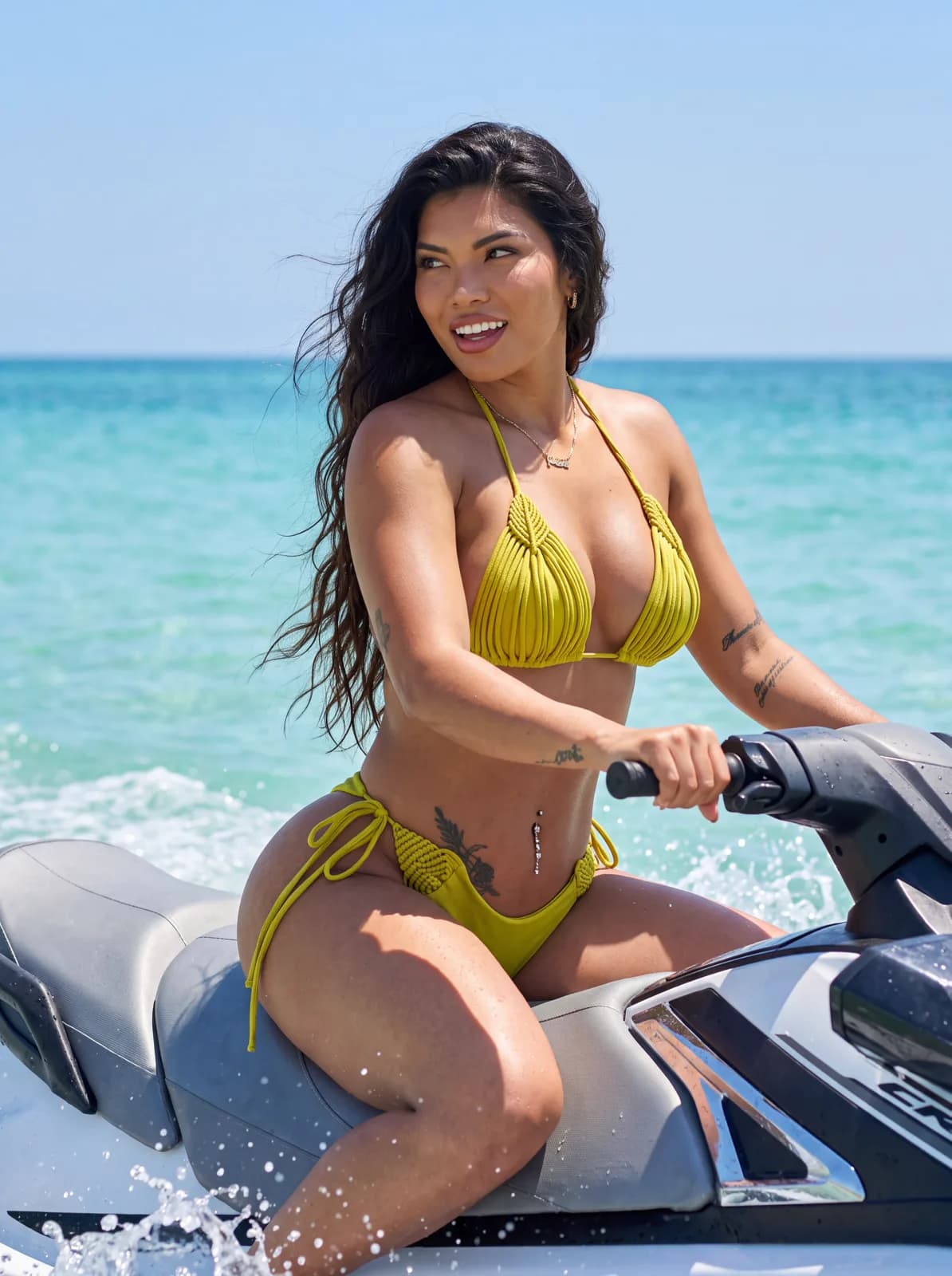
Génesis
Macramé and crochet: what actually sets them apart
They're constantly mixed up, and they're not the same thing. The difference shows in how they fall, how they hold up and how you care for them.
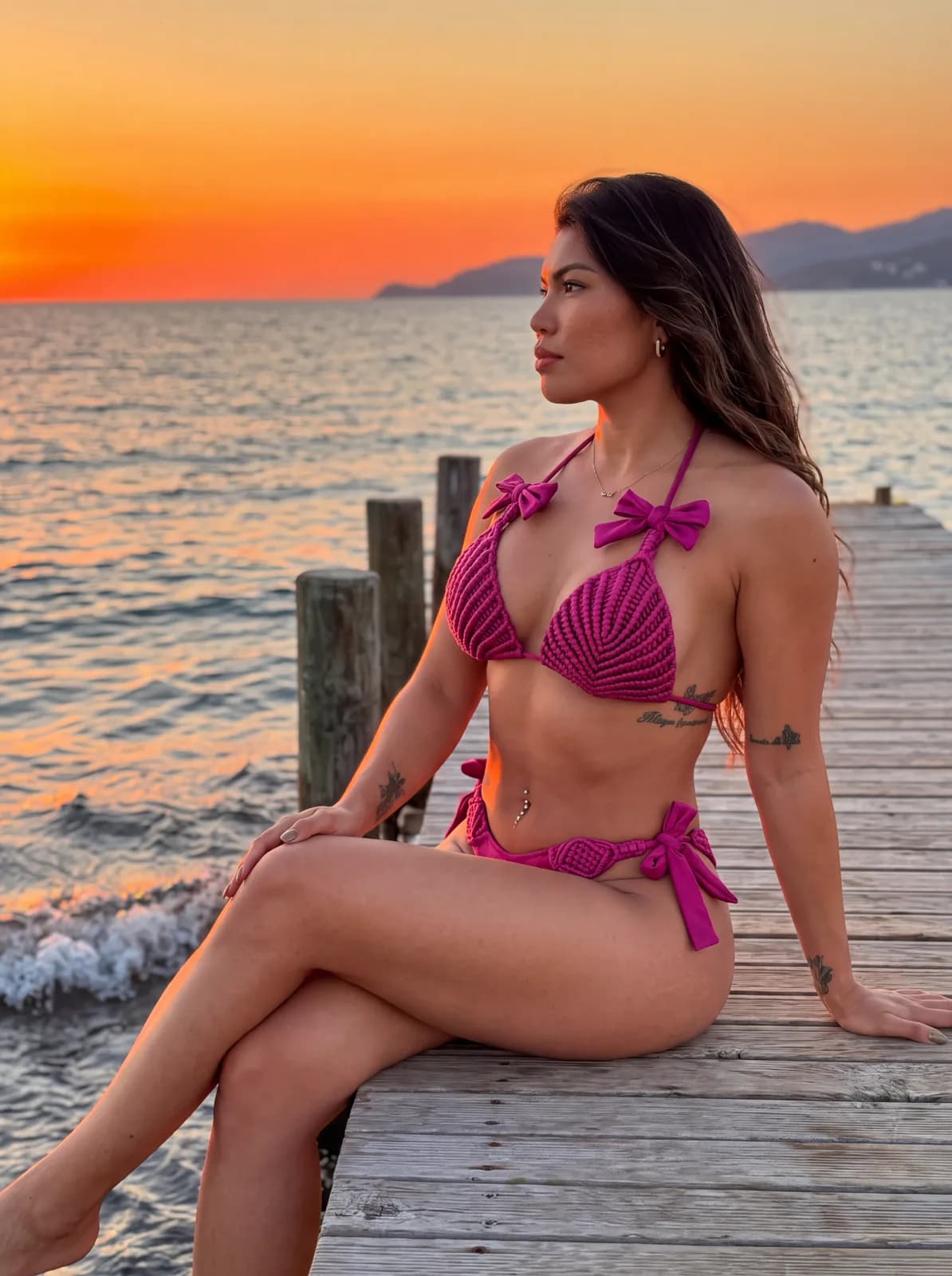
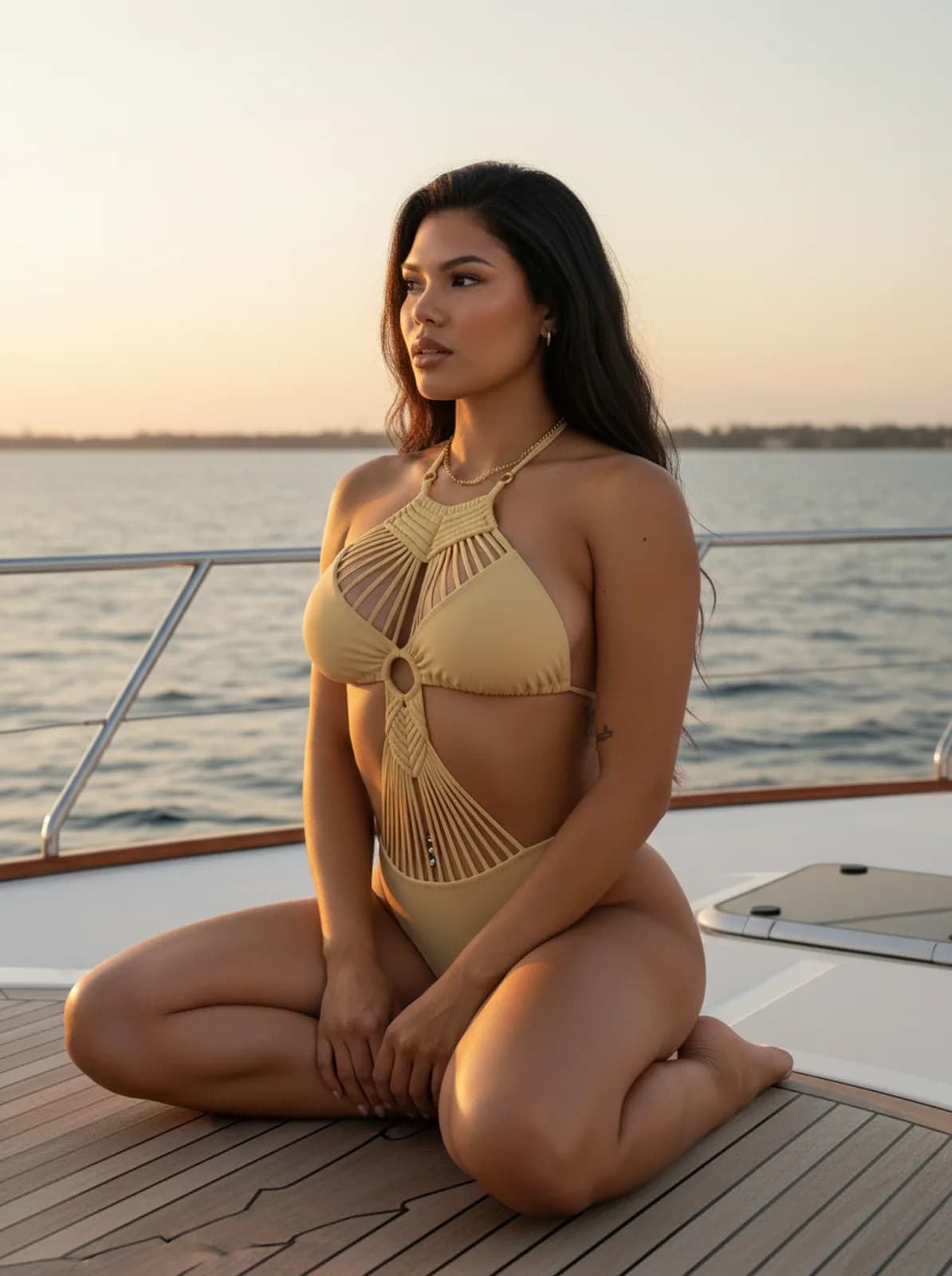
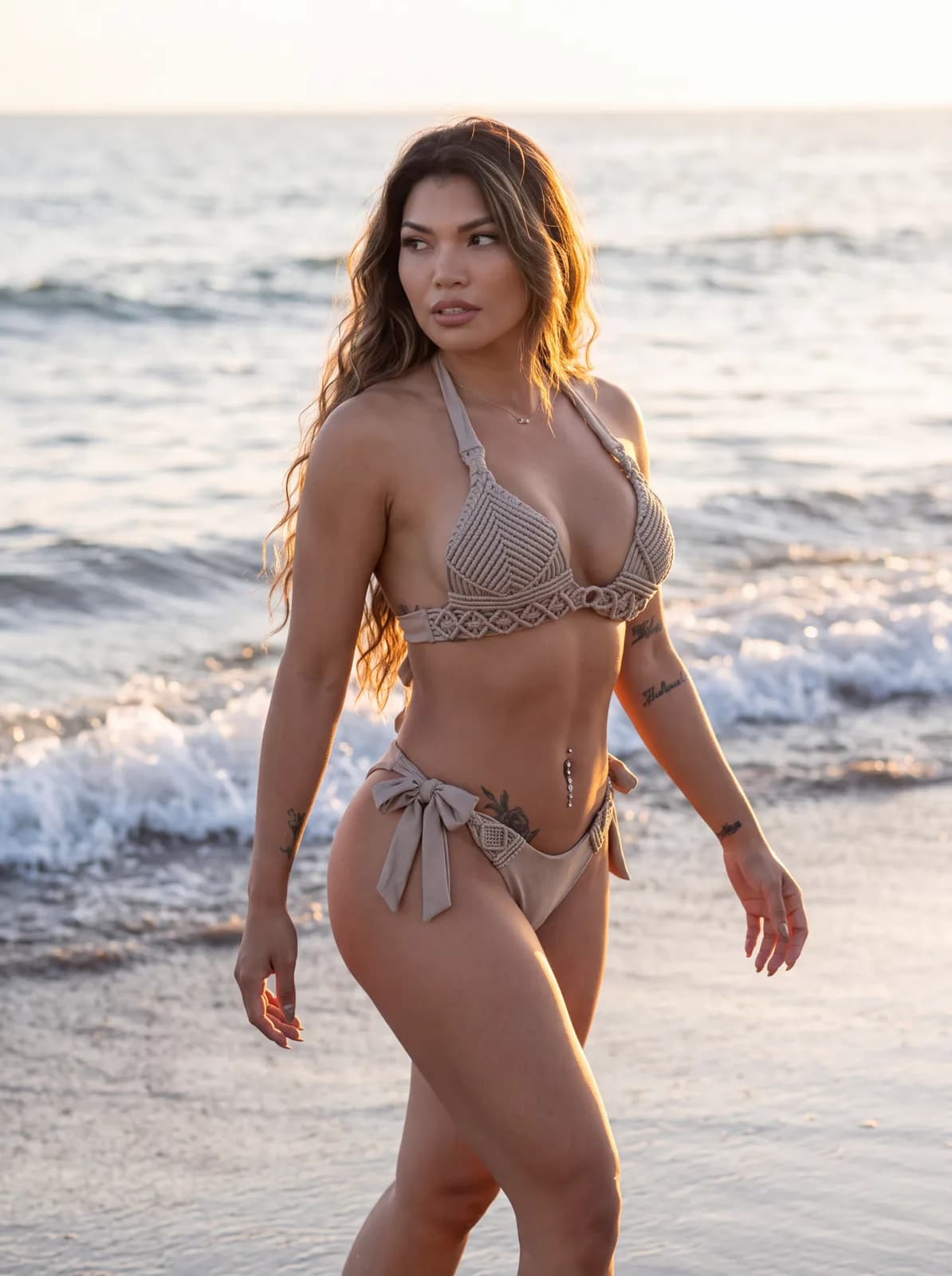
Macramé is made by knotting. There's no needle and no hook: just threads crossing over and pulling tight into knots, one after another. That's why macramé has texture, body and a strong geometric look.
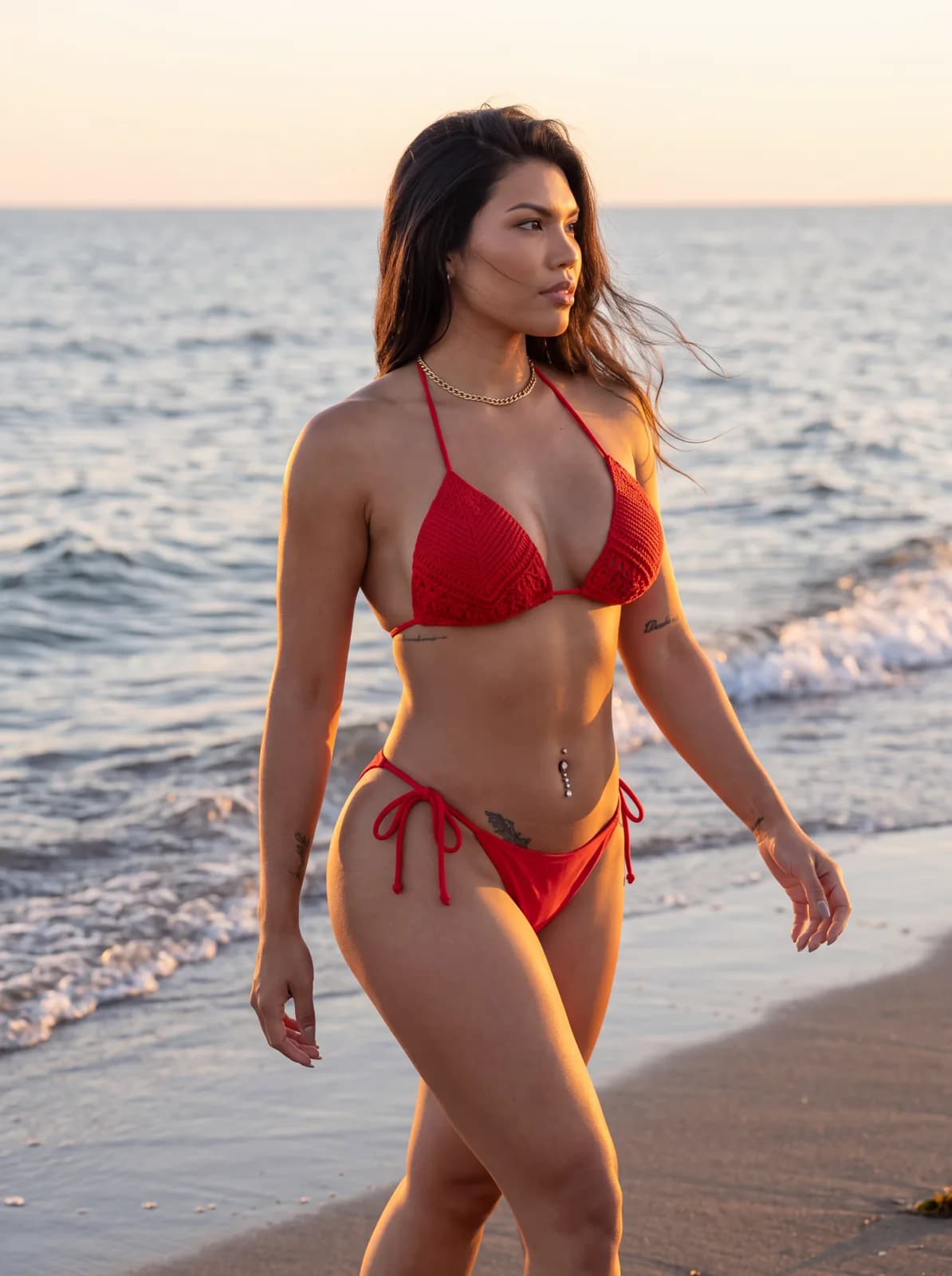
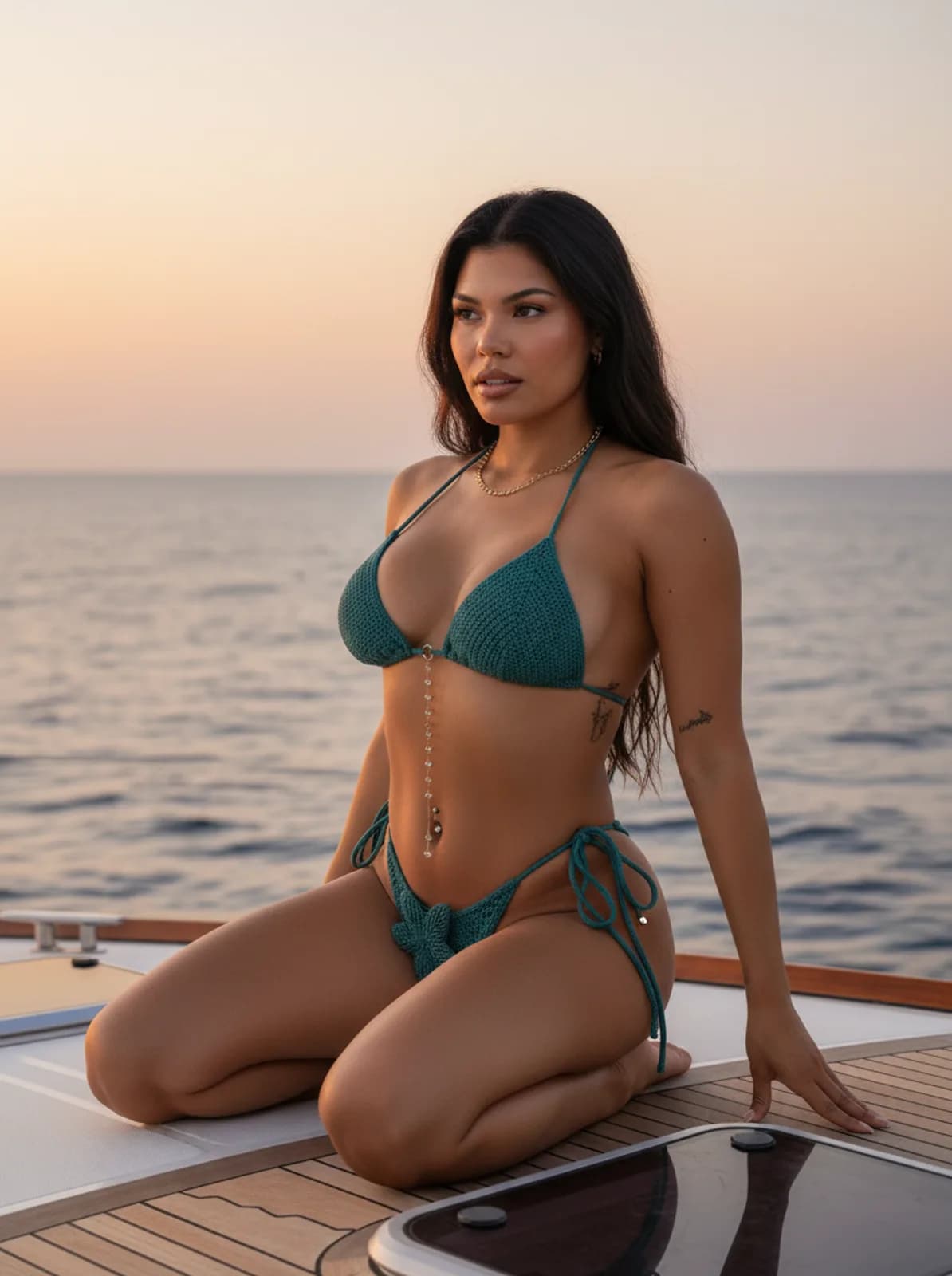
Crochet is worked with a hook, stitch over stitch, forming a continuous mesh. It's more flexible, lighter and more elastic.
In a swimwear piece, this translates into concrete differences. Macramé holds its shape better and takes more pulling, so it works well in cups and structural panels. Crochet moulds to the body and breathes more, but it gives with wear if the stitch is very open.
They also behave differently when drying: macramé holds more water in its knots and takes longer, so it's best laid flat so the weight doesn't pull it out of shape.
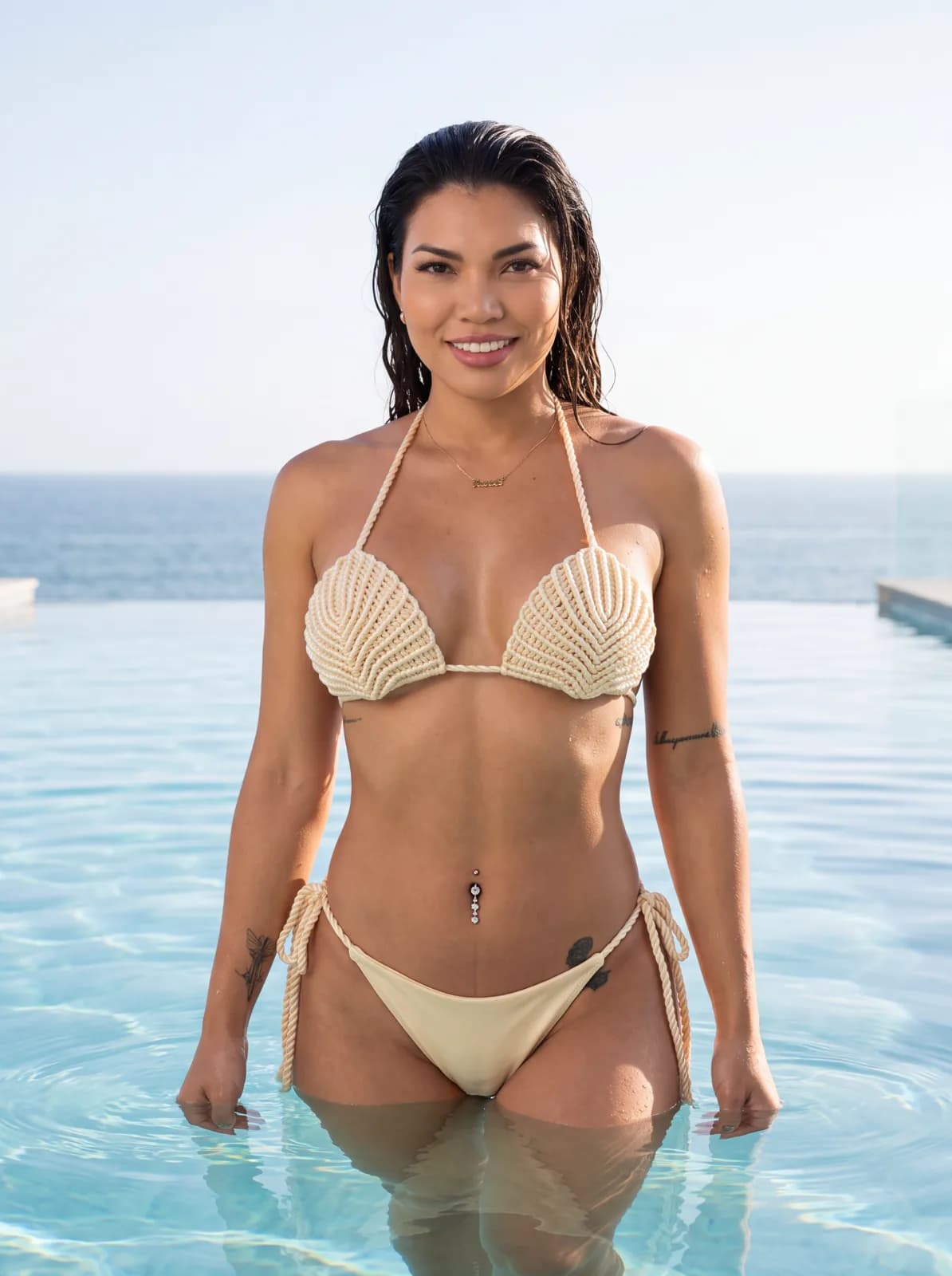
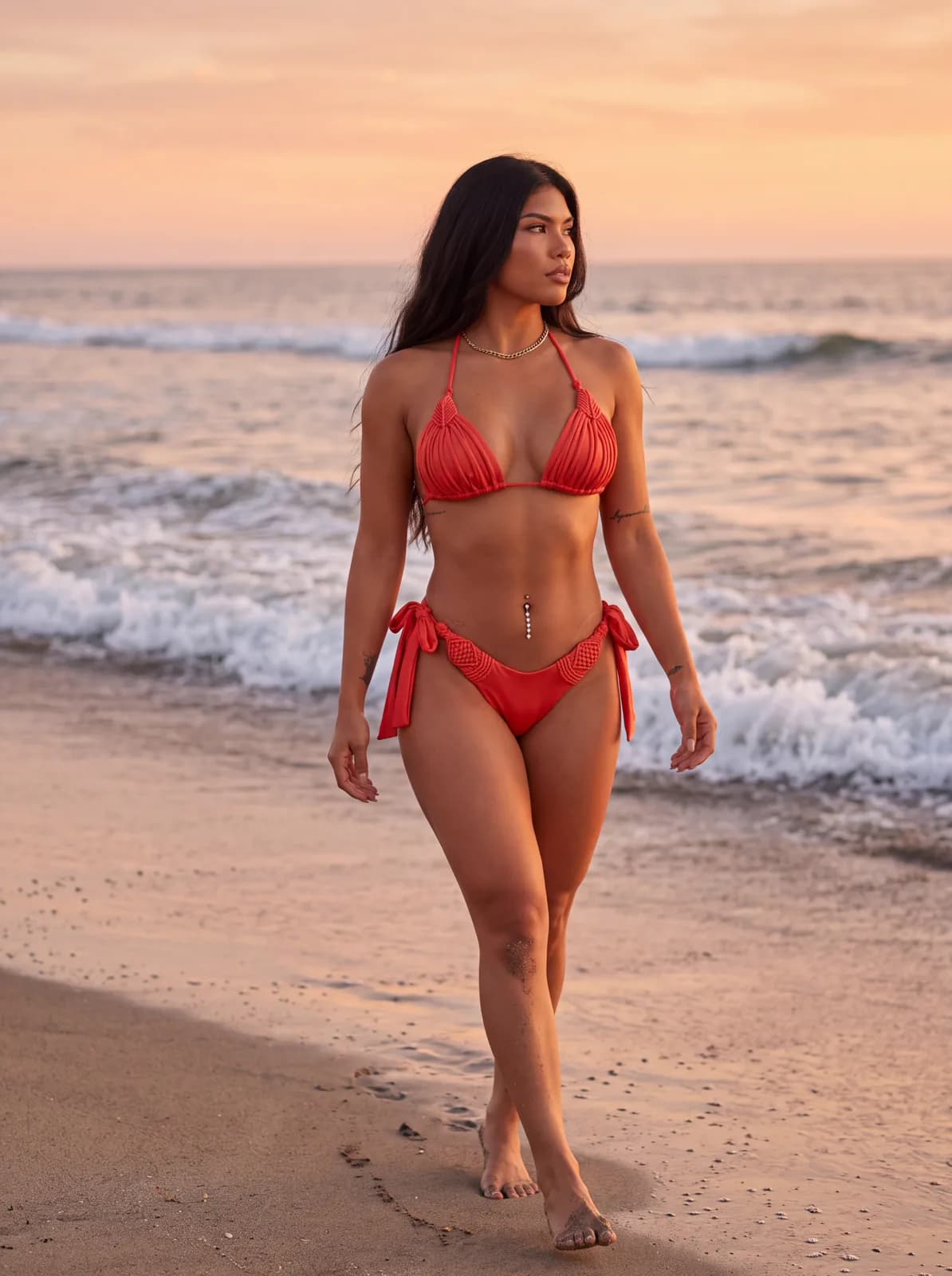
In our pieces we often combine the two, precisely because each one solves a different part of the garment. In Crochet you'll see the open stitch worked in colour, as in Rojo Pasión or Ciruela; in Macramé, the knots that give the cup its shape. And in Estrellas de mar, Conchas and Flores, the two live together in the same piece.